
Desert Assembly Blog
Why Marfa Is a Strong Choice for Corporate Retreats
Sedona, Ojai, and Santa Fe are the obvious picks for a corporate retreat. Here’s the honest case, challenges included, for choosing Marfa instead.
If you’re planning your company’s next corporate retreat, you’ve probably already priced out the usual suspects: Sedona, Ojai, Santa Fe, maybe a resort with a conference wing bolted onto it. They’re fine choices. They’re also crowded with other companies doing exactly the same thing, often in the same ballroom, one week apart.
Marfa is a different proposition. A town of about 1,800 people in the high desert of Far West Texas, three hours from the nearest major airport, surrounded by more open land than most of your team has ever seen in one place. Unlike a hotel meeting room with patterned carpet and no windows, Marfa trades four walls for open sky, and a team thinks differently because of it. That distance isn’t a drawback. It’s the point.
The case for inconvenience
The retreats that change how a team works together are the ones where people actually arrive, not just physically, mentally. Twenty years producing events for companies like Google, Visa, and NBCUniversal taught us that, including years spent producing private trips for executives around the World Economic Forum in Davos, another remote destination that rewards the people willing to commit to reaching it.
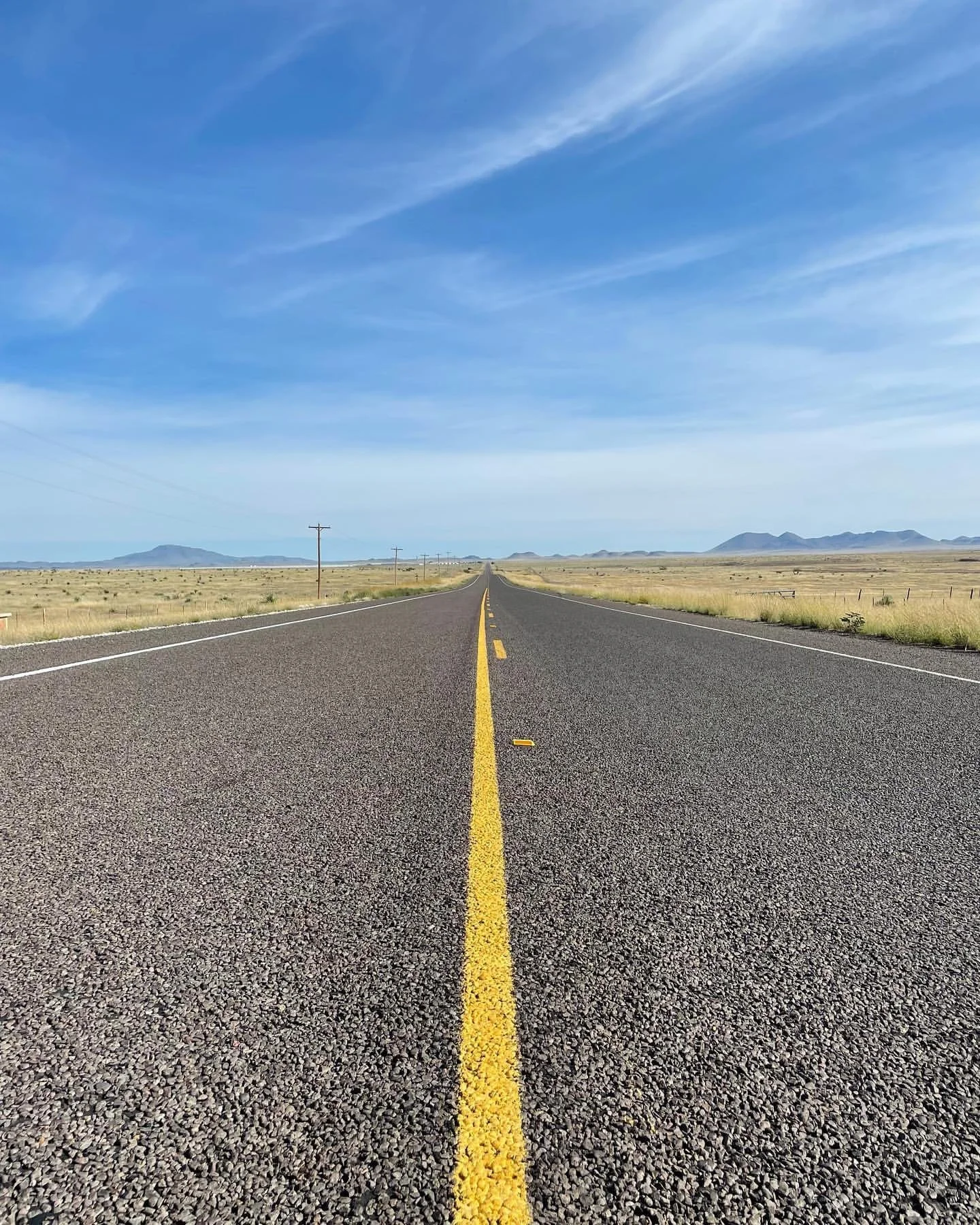
When your team lands in El Paso or Midland and drives three hours through open rangeland, something happens on that drive. The landscape opens up, attention shifts, and conversations start. By the time the Davis Mountains come into view, the quarterly numbers have loosened their grip. You cannot buy that transition with a shuttle from the airport to a resort lobby.
Sedona and Ojai are beautiful, but they’re day trips from major metros. People fly in late, leave early, and check Slack by the pool. Marfa asks for a commitment, and it rewards the commitment.
What Marfa actually offers a working team
Focus without distraction. There is no strip of chain restaurants, no outlet mall, no competing conference down the hall. There is a walkable town with serious food, an internationally recognized art scene anchored by the Chinati Foundation, and a night sky dark enough that the Milky Way shows up to your closing dinner.
Venues with character, not carpet. Far West Texas is full of spaces that don’t need to be transformed, they just need to be discovered. Desert Assembly handles private bookings for Valentine Mercantile, a restored 1907 landmark up the road in Valentine, for leadership sessions, private meals, and closing-night gatherings. In Marfa itself, historic adobes, galleries, and open ranchland can all be produced into working sessions and dinners that feel nothing like a hotel conference room.
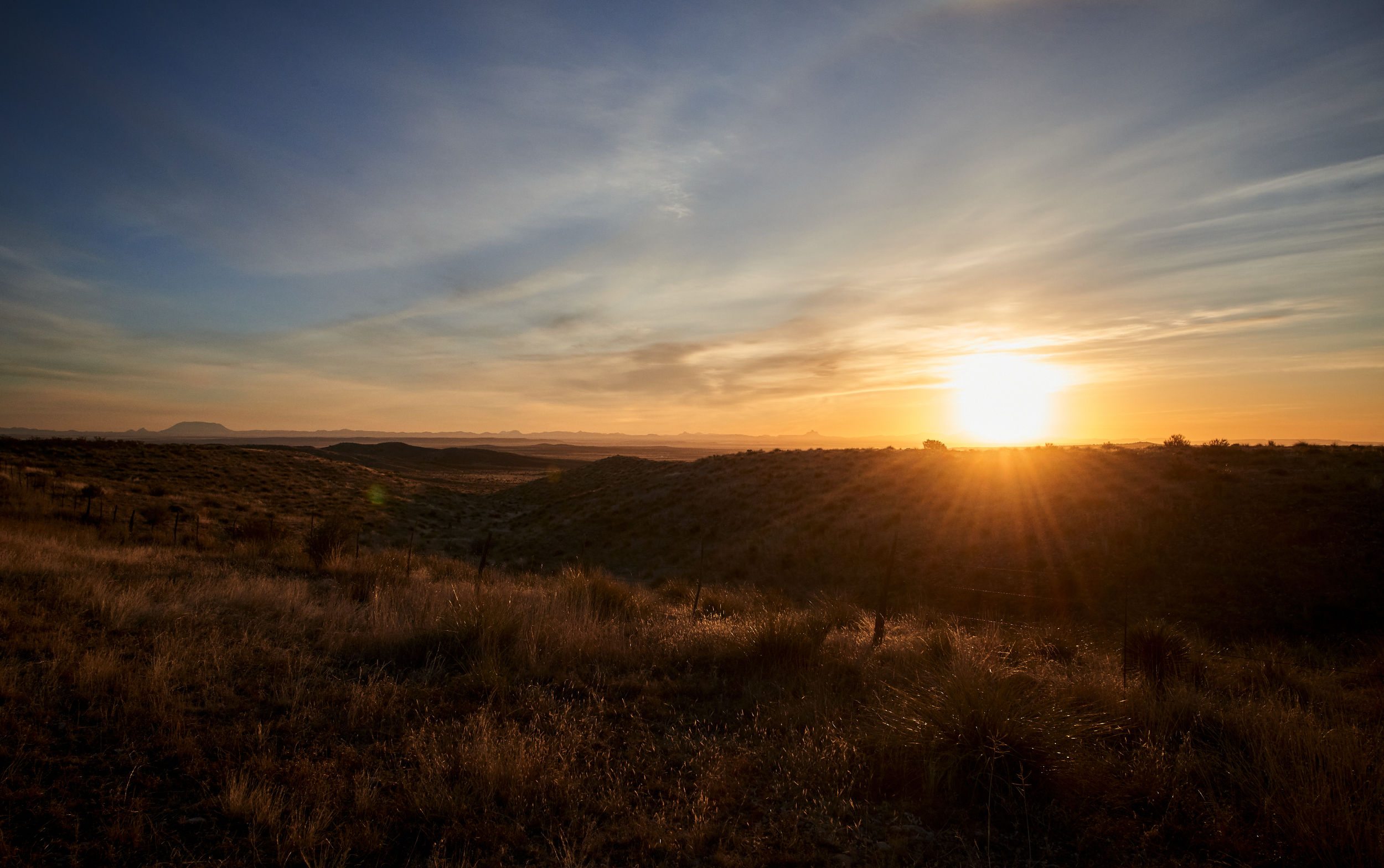
A culture worth borrowing. Donald Judd moved here in the 1970s because the place demanded a different kind of attention. Your team will feel the same pull. Meetings run differently when the view out the window is a hundred miles of grassland.
Genuine scarcity. Because Marfa sits outside the traditional corporate retreat circuit, your team won’t share the town, the hotel, or the programming with three other offsites. In most seasons, they may not share it with anyone.
The honest challenges (and how they’re solved)
We won’t pretend Marfa is turnkey, because it isn’t, and that’s exactly why production experience matters here. El Paso and Midland are each about three hours away by car, so the right answer is a produced arrival: coordinated flights, comfortable ground transport, and a first stop that lands well. Marfa’s hotels, including Hotel Saint George and the Thunderbird, have real but limited inventory, and popular weekends book out months ahead. The region’s catering, floral, and production vendors are excellent but few, and they book fast. This is where working with a local producer stops being a nice-to-have. A producer who knows the region anticipates what a demanding group needs before they ask.
None of these are reasons to choose somewhere easier. They’re reasons to plan like a producer, or to hire one.
Who a Marfa corporate retreat is for
Marfa isn’t the right destination for every company or every objective. If your team needs direct flights, a full conference center, or hundreds of identical hotel rooms, another destination will serve you better.
It works best for leadership and executive retreats, strategy sessions, creative team offsites, and founder or board gatherings, for groups that value focus and privacy over convenience and are willing to plan early and travel with intention.
Choosing the harder, better option
Sedona, Ojai, and Santa Fe will still be there, with established infrastructure and easier access. If what your team needs is convenience, choose convenience.
But if what your team needs is to actually be somewhere, together, with nothing pulling at their sleeves, Far West Texas runs on its own time, and it will lend your team some of it.
Desert Assembly produces corporate retreats and gatherings across the region, from first site visit to final departure, with the vendor relationships and production discipline this landscape requires. If Marfa is on your shortlist, reach out and we’ll tell you honestly whether it’s right for your group. You’ll understand when you get here.
How to Get to Marfa, Texas: Flights, Drives, and the Logistics Nobody Tells You
Getting to Marfa is a commitment, and the commitment is part of the experience. Here's how to do it well, with the same advice we give every client, guest, and friend who makes the trip.
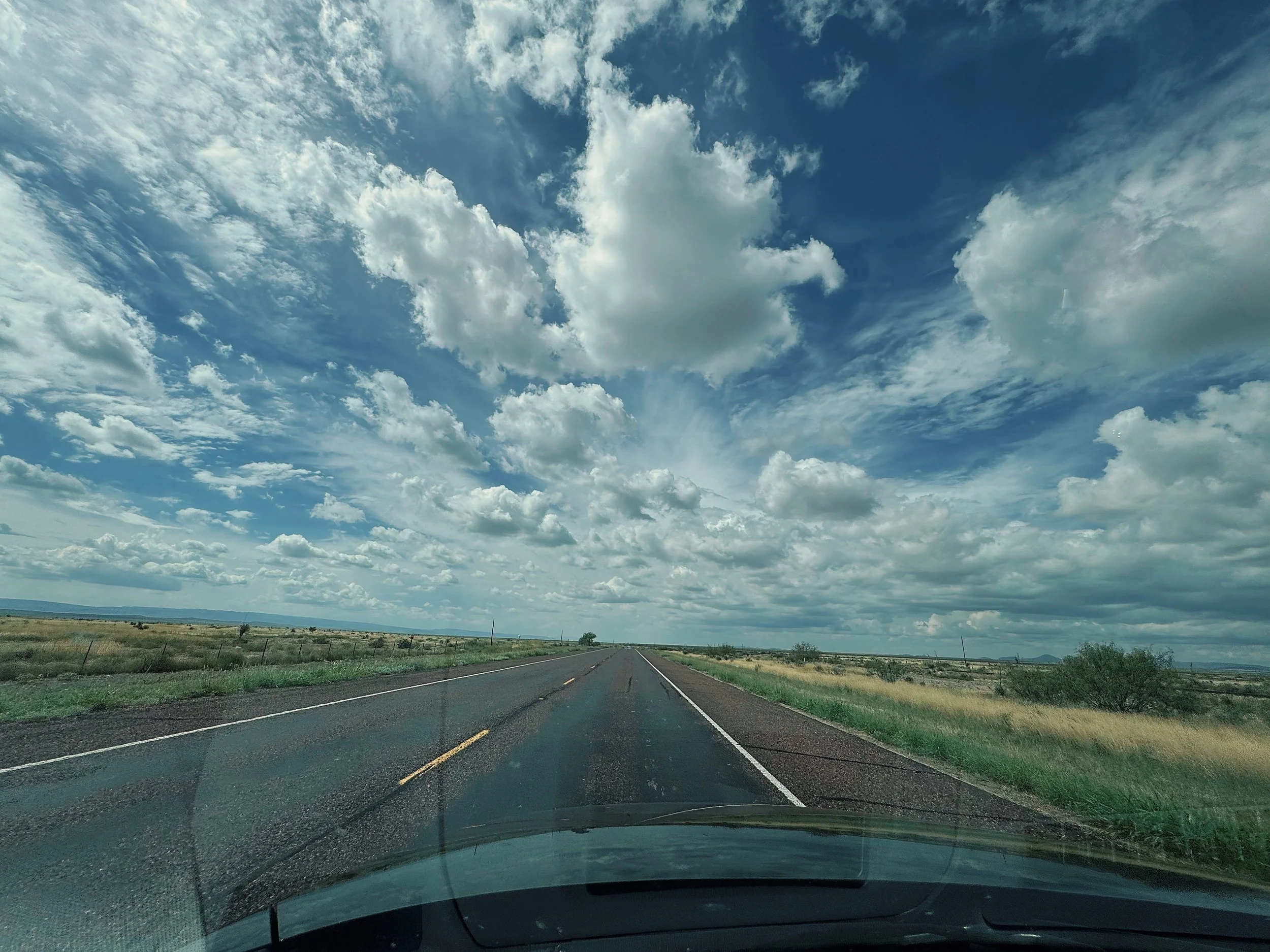
Here is the first true thing about visiting Far West Texas: getting to Marfa is a commitment, and the commitment is part of the experience. There is no direct flight, no shuttle kiosk, no shortcut, just a long drive through some of the emptiest, most beautiful country in North America.
We live at the end of that drive. What follows is the advice we give every client, guest, and friend who makes it.
Which airport to fly into
You have two practical choices: El Paso or Midland-Odessa, each about three hours from Marfa by car, with a rental car for the last leg.
El Paso (ELP) is our usual recommendation. It's a calm, easy airport with solid nonstop service from major hubs, a full row of rental car counters, and the more scenic approach. The drive runs east on I-10 to Van Horn, then south on US-90 through the little town of Valentine, past the Prada Marfa installation, which is the single best way to arrive in the region for the first time.
Midland-Odessa (MAF) works just as well from Dallas and Houston, and sometimes wins on fares and schedules. The drive comes in from the northeast, through oil country that gives way, rather suddenly, to open desert and mountains. It's less romantic for the first hour and fully worth it by the last.
A note on small aircraft: Marfa has its own municipal airport, and Alpine, 26 miles east, has one too. Private and charter flights land here regularly. Coordinating arrivals like these is familiar ground after twenty years of corporate production work, and it's part of what we handle for corporate groups and events. For commercial travelers, though, it's El Paso or Midland.
The drive to Marfa, honestly
Three hours sounds like a chore. It isn't, if you approach it right.
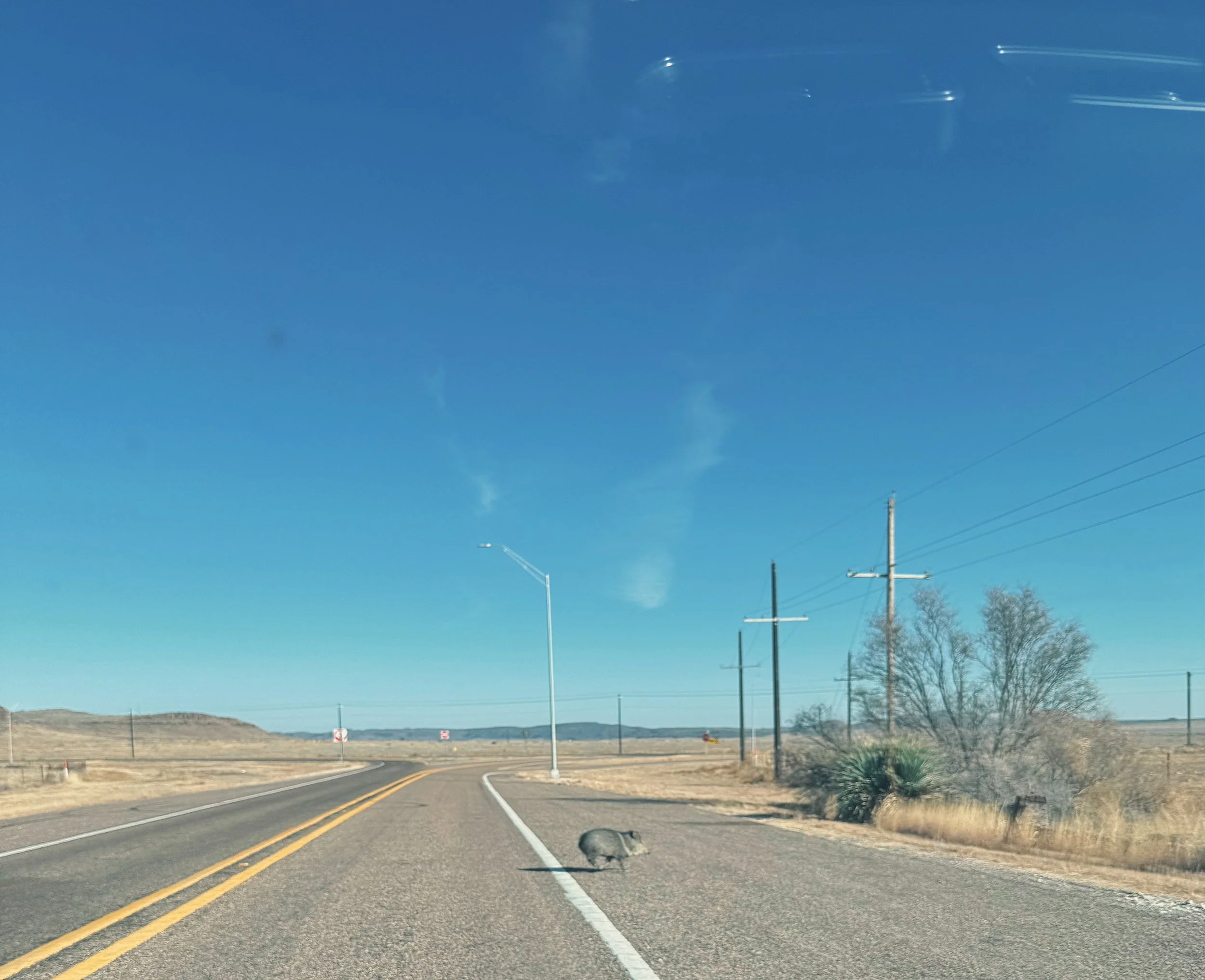
The horizon keeps widening, the mesas start, cell service thins out. And the first time you get out here, something opens: there's hope in it, there's wonder, and the spaces are so wide they make you feel held by the earth. It starts working on you long before you arrive.
Practical notes that matter:
Fuel up before you leave the interstate. Gas stations are real but far apart. A good rule for the whole region: never pass a pump below half a tank.
Watch your speed and the wildlife. Open range means occasional deer, javelina, and cattle, especially at dusk. Plan to arrive in daylight if you can. The sunset will reward you anyway.
Download your maps and music before you go. Long stretches have no signal. Plan for it, then let it happen.
Carry water. Always, everywhere out here. It's the local habit worth adopting immediately.
Do you need a car in Marfa?
For the town itself, barely. Marfa's core is compact and walkable: hotels, restaurants, galleries, and shops all sit within a few unhurried blocks. Most visitors park on arrival and touch the car only for excursions.
But the excursions are the point of the region, so yes, you want the car. The Marfa Lights viewing area sits nine miles east on Highway 90. Prada Marfa is 35 minutes northwest. Fort Davis and the McDonald Observatory's star parties are about 45 minutes north. Big Bend National Park is a two-hour drive south, and worth a full day at minimum. Book the rental car when you book the flight, since counters at these airports can genuinely run out on busy weekends.
If your trip is a group affair, a retreat, a milestone celebration, a company offsite, we recommend against a caravan of twenty rentals. Produced ground transport turns the drive into the opening act of the event, keeps everyone off unfamiliar dark highways, and is one of the first things we build into every event we produce.
The train, the romance, and the reality
Amtrak's Sunset Limited stops in Alpine three times a week in each direction, connecting to Los Angeles and New Orleans. It is slow, occasionally late, and completely wonderful if the journey itself is the vacation. For most travelers it's a novelty rather than a plan. For the right anniversary trip, it's the whole romance.
Arriving well
Two last pieces of local advice. First, plan your arrival day gently: land by early afternoon, drive with the light, check in, and let your first evening be nothing more than a good dinner and the night sky. Second, remember that Far West Texas runs on its own time. Kitchens close earlier than city travelers expect, distances are real, and rushing gets you nowhere out here.
If you'd rather hand all of this to someone who lives it, that's what our Travel Guidance services are for. The Desert Dispatch gets you a custom written brief for your dates and interests. The West Texas Journey adds an intake call and a full day-by-day itinerary. The Full Assembly means we plan the whole trip and stay reachable while you're out here. And when you're ready to celebrate something under this sky, from a styled desert picnic to a full gathering, we're here for that too.
The drive is long. It's supposed to be. You'll understand when you get here.